
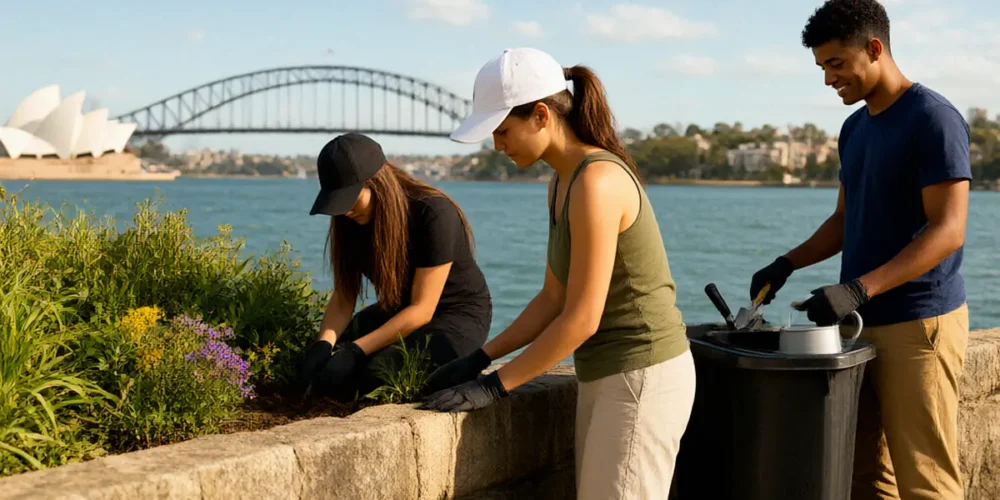
Volunteering in Sydney: Getting Started
Rent is up, groceries are up, and yet every week tonnes of good food still gets thrown out across Sydney. We know the feeling of standing in a supermarket aisle doing mental arithmetic on a packet of pasta — and we also know what it’s like to stand in a community kitchen in Surry Hills handing that same pasta to someone who needs it more. That contrast is what pulled our team into volunteering, and it’s what keeps us coming back. If you’ve been meaning to get involved but don’t know where to start, this is the guide we wish we’d had.
Why Volunteering in Sydney Matters Right Now

Sydney is an expensive city to be poor in. Rents in the inner west and eastern suburbs have climbed well past what many households can absorb, and when the choice comes down to rent or food, food usually loses. That’s the reality behind the queues you see outside community meals in Kings Cross and Surry Hills — they’re not abstract statistics, they’re neighbours.
National food rescue charities like Foodbank Australia and OzHarvest do enormous work to bridge that gap, but they rely on volunteers to sort, pack, cook and deliver. Without people giving a few hours a week, the food simply doesn’t move.
The scale of food insecurity in NSW
Foodbank Australia’s annual Hunger Report has consistently found that millions of Australians experience food insecurity each year, and NSW carries a large share of that burden. In Sydney, the households most at risk are often those you’d least expect: single parents working part-time, international students, older renters on the pension, and casual workers whose shifts dry up over summer. Food insecurity in a city this wealthy isn’t a supply problem — it’s a logistics and distribution problem, and that’s exactly where volunteers fit in.
How food rescue turns waste into meals
Food rescue works on a simple principle: catch surplus food before it becomes waste and get it to people who need it. Supermarkets, bakeries, cafes and caterers over-order or misjudge demand, and perfectly edible stock gets pulled from shelves. Organisations like OzHarvest collect that surplus, sort it, and redistribute it through charities, community kitchens and mobile outreach. In practice, a volunteer shift might mean driving a van between three CBD cafes and a community centre, or sorting pallets of fresh produce into family-sized boxes. Either way, the result is the same — food that would have gone to landfill becomes dinner.
Finding the Right Volunteering Role for You
Not everyone wants to be on their feet in a kitchen, and that’s fine. Volunteering in Sydney covers a wide spectrum, from driving a food rescue van to running the social media for a fundraising campaign. The two big national listing platforms are Seek Volunteer and GoVolunteer, and both let you filter by suburb, cause, and time commitment. We’d recommend browsing there before you commit to anything.
Hands-on roles: community meals and food rescue
These are the roles most people picture when they think of volunteering. Community meals involve preparing, plating and serving food at sit-down services, often in partnership with organisations like Wayside Chapel in Kings Cross. Food rescue driving means collecting surplus stock from retailers and delivering it to charities. Both are physically active, social, and give you an immediate sense of where your effort went.
Behind-the-scenes roles: fundraising and admin
Fundraising is the engine that keeps food rescue and community meals running. Volunteers help with grant applications, donor outreach, event logistics, and database management. Admin roles — rostering, intake, record-keeping — are equally valuable and often more flexible for people with unpredictable work schedules. If you’ve got bookkeeping, design or writing skills, charities will bite your hand off.
How to Get Started: A Practical Checklist
The hardest part is usually the first step, so here’s the process we’d follow if we were starting from scratch today.
- Pick one cause that actually matters to you — food rescue, homelessness support, or community meals are all good entry points.
- Search Seek Volunteer or GoVolunteer for roles within a 30-minute commute of home.
- Check any requirements. If you’ll be working with children, you’ll need a Working With Children Check, which is free for volunteers in NSW.
- Attend an induction session — most organisations run these monthly and they’re a low-pressure way to see if it’s a fit.
- Commit to one regular shift rather than sporadic drop-ins. Consistency is what charities actually need.
Checks, inductions and what to expect
Most roles require a police check or a Working With Children Check, and food handling roles often need a short online food safety module. Inductions typically run for one to two hours and cover safety, expectations, and a tour of the site. Vinnies NSW and The Salvation Army both run accessible entry points for new volunteers, with structured inductions and ongoing support. Don’t be put off by the paperwork — it’s usually completed online and processed within a couple of weeks.
Balancing volunteering with work and study
You don’t need to give up your weekends. Plenty of Sydney organisations run evening shifts, early morning food rescue runs, and flexible admin roles you can do from home. A two-hour commitment once a fortnight is genuinely useful. The trick is picking a slot you can protect — same day, same time, every week or fortnight — so it becomes a habit rather than a negotiation with yourself.
Where to Volunteer in Sydney: Organisations We Rate
We’ve worked alongside or volunteered with most of these, and they’re the ones we’d point a friend towards.
Food rescue and community meals
- OzHarvest — Sydney-born food rescue operation with regular volunteer shifts sorting and packing rescued food.
- Foodbank NSW — large-scale warehouse volunteering, packing hampers and sorting donations.
- Vinnies NSW — runs community meals, op shops and emergency relief across Sydney; strong induction process for new volunteers.
- Wayside Chapel — Kings Cross institution providing meals, showers and support services; volunteer roles include kitchen and outreach.
- Local community centres — many in Surry Hills, Marrickville and Bankstown run weekly community meals and always need hands.
Fundraising and event-based volunteering
If you’d rather help behind the scenes, fundraising committees and event crews are always short on people. Think charity fun runs, trivia nights, and end-of-year appeals. These roles suit volunteers who want variety, enjoy meeting people, or have skills in marketing, events or sponsorship. They’re also a great way to test the waters before committing to a weekly shift.
Making It Stick: Avoiding Burnout and Going Long-Term
We’ve seen plenty of enthusiastic first-timers burn out within two months because they said yes to everything. Sustainable volunteering is about rhythm, not intensity.
Setting boundaries and avoiding burnout
Start with one shift a fortnight, not three a week. Say no when you’re stretched. Take a break when you need one — good organisations will welcome you back. The volunteers who last years, in our experience, are the ones who protected their own energy and treated volunteering as part of their routine rather than an obligation.
Growing into leadership and fundraising
Once you’re settled, there’s room to grow. Many Sydney charities promote regular volunteers into shift leaders, team coordinators, or fundraising committee members. That’s where you can bring professional skills — project management, budgeting, communications — into play and multiply your impact without adding hours.
FAQ
Do I need a Working With Children Check to volunteer in Sydney?
Only if your role involves contact with children, such as tutoring, youth programs or family services. In NSW the check is free for volunteers, and most organisations will guide you through the application during induction.
How much time do I need to commit each week?
Two hours a fortnight is enough to be genuinely useful. Food rescue shifts are often three to four hours, while admin and fundraising roles can be done in shorter blocks from home.
Can I volunteer if I work full-time?
Yes. Many Sydney organisations run evening and weekend shifts specifically for working volunteers. Early morning food rescue runs are also popular with people who start work later in the day.
Which organisations are best for first-time volunteers?
Vinnies NSW and The Salvation Army both have structured inductions and welcoming teams, which makes them ideal starting points. OzHarvest and Foodbank NSW are also well set up for new volunteers.
Is there a minimum age to volunteer?
Most organisations accept volunteers from age 16 or 18, though some roles allow younger volunteers with a guardian. Check with the individual charity before applying.
Volunteering in Sydney doesn’t require a grand gesture — it starts with one small, consistent step. Pick one organisation from this list, book an induction this month, and see where it takes you. The need is real, the roles are there, and the only thing missing is you.