

Organising a Food Drive: How We Turn Community Spirit into Real Meals
Last week I watched a supermarket trolley stacked with discounted bread rolls head straight for the bin, while two suburbs over a mum was working out how to stretch a tin of tomatoes across four dinners. That contrast isn’t rare in Australia. It’s Wednesday. It’s every Wednesday. And it’s exactly why our team keeps coming back to the humble food drive — it’s one of the simplest, most tangible ways a street, a school or a workplace can turn goodwill into actual meals on actual plates.
Why Food Drives Matter in Australia Right Now
We don’t need to convince anyone that times are tight. What surprises people is just how wide the gap has grown between what we throw away and what we need. According to the National Food Waste Strategy, Australia wastes 7.6 million tonnes of food each year — roughly a third of everything we produce. At the same time, Foodbank Australia’s Hunger Report reveals over 3.7 million households experienced food insecurity in the past year. That’s not a statistic from a distant country. That’s our neighbours, our kids’ classmates, our colleagues.
The Hidden Hunger in Our Suburbs
Food insecurity doesn’t always look like an empty pantry. In our experience running community meals, it looks like parents skipping lunch so their teenagers can eat, or older Australians choosing between medication and groceries. It’s hidden because people are often embarrassed to ask for help. Food drives work quietly in the background — they stock the shelves of local pantries so a family can walk in without anyone knowing their name.
How Food Rescue Changes the Equation
The good news is that surplus food doesn’t have to be wasted. Food rescue organisations collect edible food that retailers and manufacturers can’t sell and redirect it to people who need it. OzHarvest is a leading Australian food rescue organisation that collects surplus food from retailers like Woolworths and Coles, and it’s a name you’ll see on the side of vans in almost every capital city. FareShare and SecondBite are Australian charities that turn rescued food into millions of meals for vulnerable people. A food drive feeds into that same pipeline — just at a community scale.
Planning Your Food Drive: The Essentials
Every successful drive we’ve been part of started with a boring conversation: what are we actually trying to achieve, and who’s going to make it happen? Skip that step and you’ll end up with three pallets of canned beetroot and no plan.
Setting Realistic Goals and Timelines
We recommend starting with a two-to-four week window — long enough to build momentum, short enough that volunteers don’t burn out. Set a specific goal, like “500 non-perishable items” or “enough to fill 50 hampers.” Write it down, share it, and check in weekly.
- Week 1: Confirm your charity partner, lock in dates, print flyers.
- Week 2: Launch with a shout-out on social media and in your workplace or school newsletter.
- Week 3: Collect, sort and promote progress photos.
- Week 4: Deliver donations, thank everyone, and share the results.
Partnering with Local Charities and Councils
Before you collect a single can, register with a local charity or council. Foodbank, OzHarvest and SecondBite all work with community groups, and most councils have a community development officer who can connect you with the right recipient. Always check the charity’s donation guidelines — many can’t accept home-canned goods, opened packets, or anything past its use-by date. Trust us, sorting out that mismatch after the fact is no fun for anyone.
Running the Drive: Logistics and Volunteering
The middle week is where the magic (and the chaos) happens. Good logistics make the difference between a smooth collection and a stack of boxes sitting in someone’s garage for six weeks.
Setting Up Collection Points That Work
Choose spots with natural foot traffic and someone responsible for checking them daily. Community centres, school foyers, libraries and workplace kitchens all work well. Woolworths and Coles often allow community collection bins near their entrances if you coordinate with store management. Label every box clearly with what’s accepted and what isn’t. A simple laminated sign beats a confused donor every time.
Coordinating Volunteers and Sorting Shifts
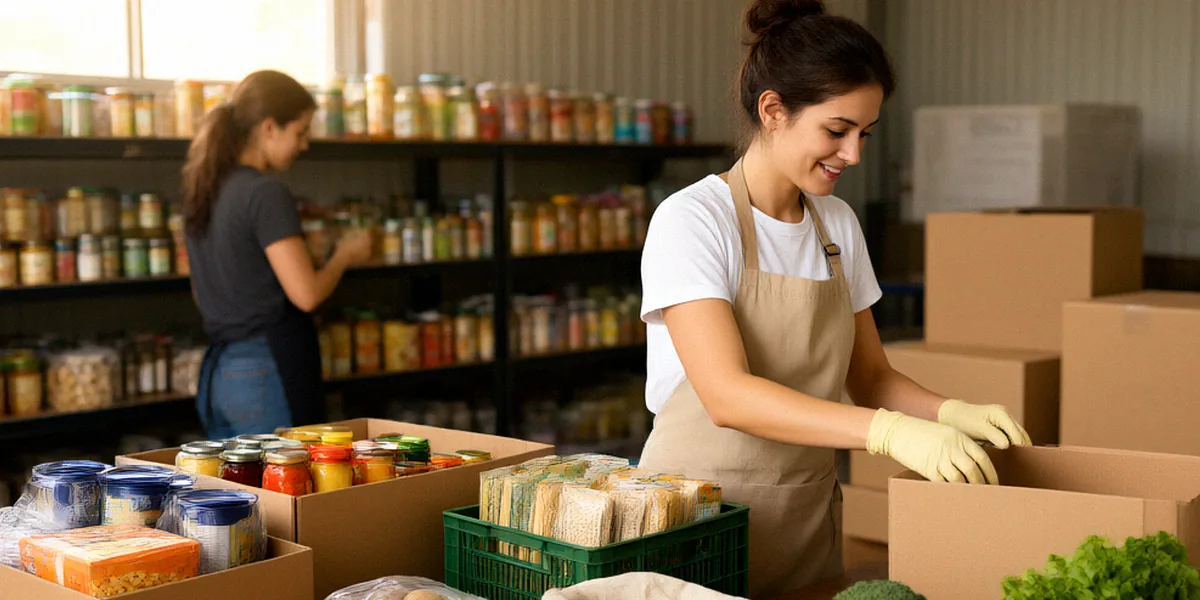
We run sorting in two-hour blocks so nobody’s stuck in a cold hall all evening. Typical roles include:
- Collection point monitors who empty and top up bins.
- Sorters who check dates, group items by category, and pack hampers.
- Drivers who ferry boxes to the recipient charity.
- A coordinator who handles questions, social media, and thank-yous.
Schools are brilliant at this — student councils love the responsibility. So do local sporting clubs looking for a community service project.
Boosting Donations with Fundraising and Awareness
Food drives aren’t just about tins. Many people would rather donate cash than haul groceries, and that’s fine — it often goes further because charities can buy in bulk.
Online Fundraising Tools for Australian Nonprofits
mycause and GoFundMe are popular Australian online fundraising platforms for charity drives, and both let you set up a page in under half an hour. Add a link to your donation flyer and social posts. If your charity partner is a registered deductible gift recipient, donors may also be able to claim a tax deduction — always worth mentioning.
Using Social Media and Local Press
Post progress updates — “we’re at 240 items, help us hit 500” — because people respond to momentum. Tag your local council and charity partner. Then email your local paper or community radio station; they’re almost always looking for positive local stories, and a short media mention can double your donations. If you can’t run an in-person drive at all, a virtual food drive works too: donors shop online and have groceries delivered straight to the charity.
After the Drive: Distribution and Impact
The drive doesn’t end when the last box is taped shut. This is the part that actually matters.
From Collection to Community Kitchen
Donations flow into community meals programs, food rescue operations, and directly to families through school breakfast clubs and emergency relief hampers. FareShare and SecondBite are two of the biggest names in that chain — they take rescued and donated food and turn it into millions of meals for Australians doing it tough. Smaller local charities often cook the food on-site within days, which means your donations can be on a plate by the weekend.
Measuring and Sharing Your Impact
Ask your charity partner for a rough figure — how many kilograms, how many hampers, how many meals. Then tell everyone who donated. A short email with “your donations fed 120 people this month” does more for community spirit than any thank-you card. It also makes next year’s drive easier, because people remember results.
FAQ
What food items are best to donate to an Australian food drive?
Non-perishables with long dates: pasta, rice, tinned vegetables and fruit, tinned tuna or beans, long-life milk, cereal, and pasta sauce. Avoid anything past its use-by date, home-canned items, or opened packaging. Always check your charity partner’s guidelines first.
Do I need to register my food drive with a charity?
Yes, we strongly recommend it. Registering with a charity like Foodbank, OzHarvest, FareShare or SecondBite — or your local council’s community team — ensures your donations reach people who need them and meet food safety requirements.
Can I run a food drive with no physical collection point?
Absolutely. A virtual food drive lets supporters donate cash through platforms like mycause or GoFundMe, or order groceries online for direct delivery to the charity. It works especially well for remote teams and schools.
How long should a food drive run for?
Two to four weeks is the sweet spot. It’s long enough to build awareness and short enough to keep volunteers motivated and food fresh.
Is donating money better than donating food?
Both help, but cash often goes further because charities can buy in bulk, fill gaps in their stock, and cover transport costs. Running a hybrid drive — food plus a fundraising link — captures both kinds of generosity.
Where to From Here
Organising a food drive is one of the most tangible ways to strengthen your community. You don’t need a committee, a budget, or a warehouse — just a box, a sign, and a handful of people willing to help. Start small. Pick one collection point. Choose one charity. Set a modest goal. Then watch what your street, school or workplace can do when the ask is simple and the purpose is clear.